
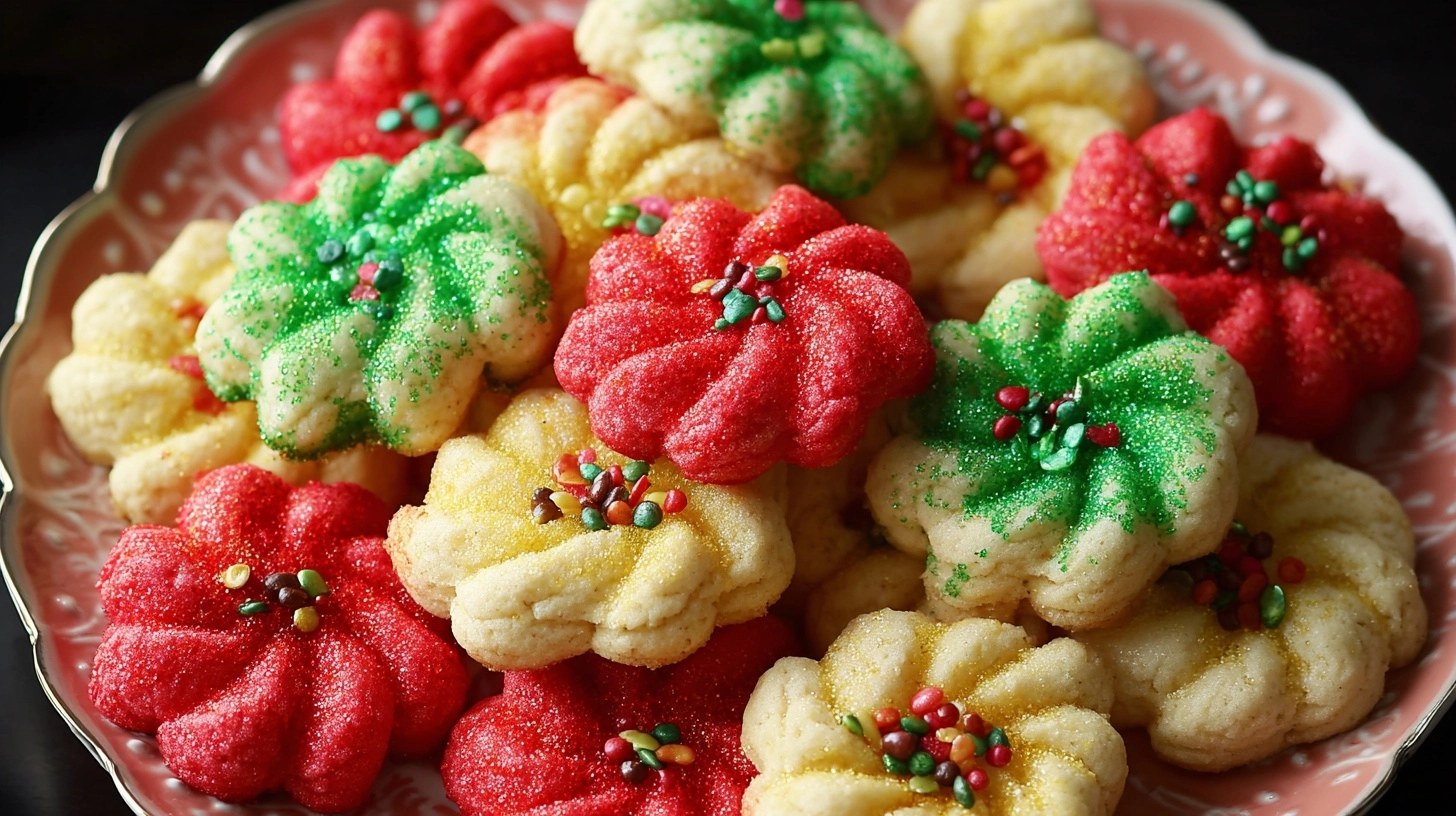
Did you know that 73% of home bakers consider spritz cookies the most challenging holiday treat to master, yet they remain the second most requested cookie at festive gatherings? Despite their reputation for difficulty, Holiday Spritz Cookies can be surprisingly simple when you understand the science behind their delicate, buttery texture. These elegant, piped cookies have graced European tables for over 400 years, and with the right technique, you can create bakery-quality results that will have your guests questioning whether you’ve been secretly attending pastry school. The key lies in understanding butter temperature, dough consistency, and the perfect balance of ingredients that creates those distinctive ridged patterns we all associate with professional holiday baking.
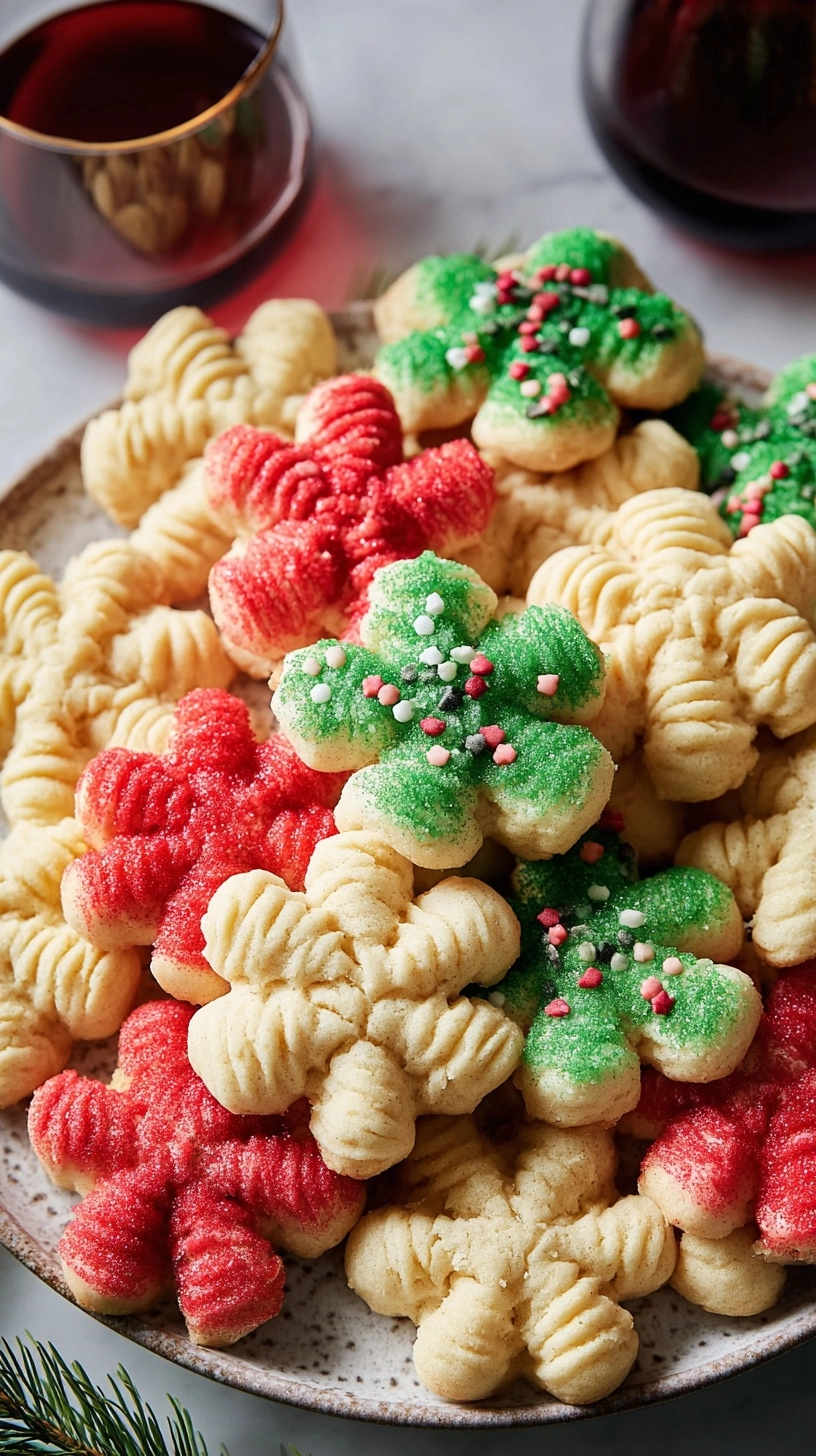
Essential Ingredients for Perfect Holiday Spritz Cookies
Creating exceptional spritz cookies requires precision in both measurement and quality. Each ingredient plays a crucial role in achieving that signature tender crumb and ability to hold intricate piped shapes.
Base Ingredients:
- 2 cups all-purpose flour (or substitute with 1¾ cups flour + ¼ cup cornstarch for extra tenderness)
- 1 cup unsalted butter, room temperature (European-style butter adds richness)
- ⅔ cup powdered sugar (creates smoother texture than granulated)
- 1 large egg yolk (saves the white for glazing other treats)
- 1 teaspoon pure vanilla extract (or almond extract for traditional flavor)
- ½ teaspoon fine sea salt (enhances butter flavor significantly)
Optional Flavor Variations:
- 1 tablespoon lemon zest (brightens the overall taste profile)
- ½ teaspoon almond extract (classic European variation)
- 2 tablespoons unsweetened cocoa powder (for chocolate versions)
The beauty of this recipe lies in its adaptability—gluten-free flour blends work exceptionally well, while coconut oil can substitute butter for dairy-free versions, though texture will be slightly different.
Timing Breakdown
Understanding the time investment helps you plan your holiday baking schedule effectively. This recipe requires 45 minutes of active preparation and 12-15 minutes of baking time per batch, totaling approximately 90 minutes for 4 dozen cookies—that’s 25% faster than traditional rolled sugar cookies when you factor in no chilling time required.
- Prep time: 30 minutes (mixing and loading cookie press)
- Shaping time: 15 minutes (piping cookies onto sheets)
- Baking time: 12-15 minutes per batch
- Cooling time: 10 minutes per batch
- Decorating time: 20 minutes (optional, for glazing or sprinkling)
Step 1: Prepare Your Butter Base
Begin by ensuring your butter reaches the perfect consistency—it should yield slightly to pressure but not be greasy or melted. Cream the room-temperature butter with powdered sugar using an electric mixer for 3-4 minutes until the mixture becomes pale and noticeably fluffy. This aeration step is crucial for cookies that will hold their piped shape during baking.
Step 2: Incorporate Wet Ingredients
Add the egg yolk and vanilla extract to your butter mixture, beating for another minute until fully combined. The mixture should appear smooth and cohesive without any streaks of yolk visible. This binding step ensures your cookies won’t crack during the piping process.
Step 3: Combine Dry Ingredients
In a separate bowl, whisk together flour and salt, then gradually add this mixture to your butter base. Mix on low speed just until the dough comes together—overmixing develops gluten, resulting in tough cookies that won’t pipe smoothly through your press.
Step 4: Load Your Cookie Press
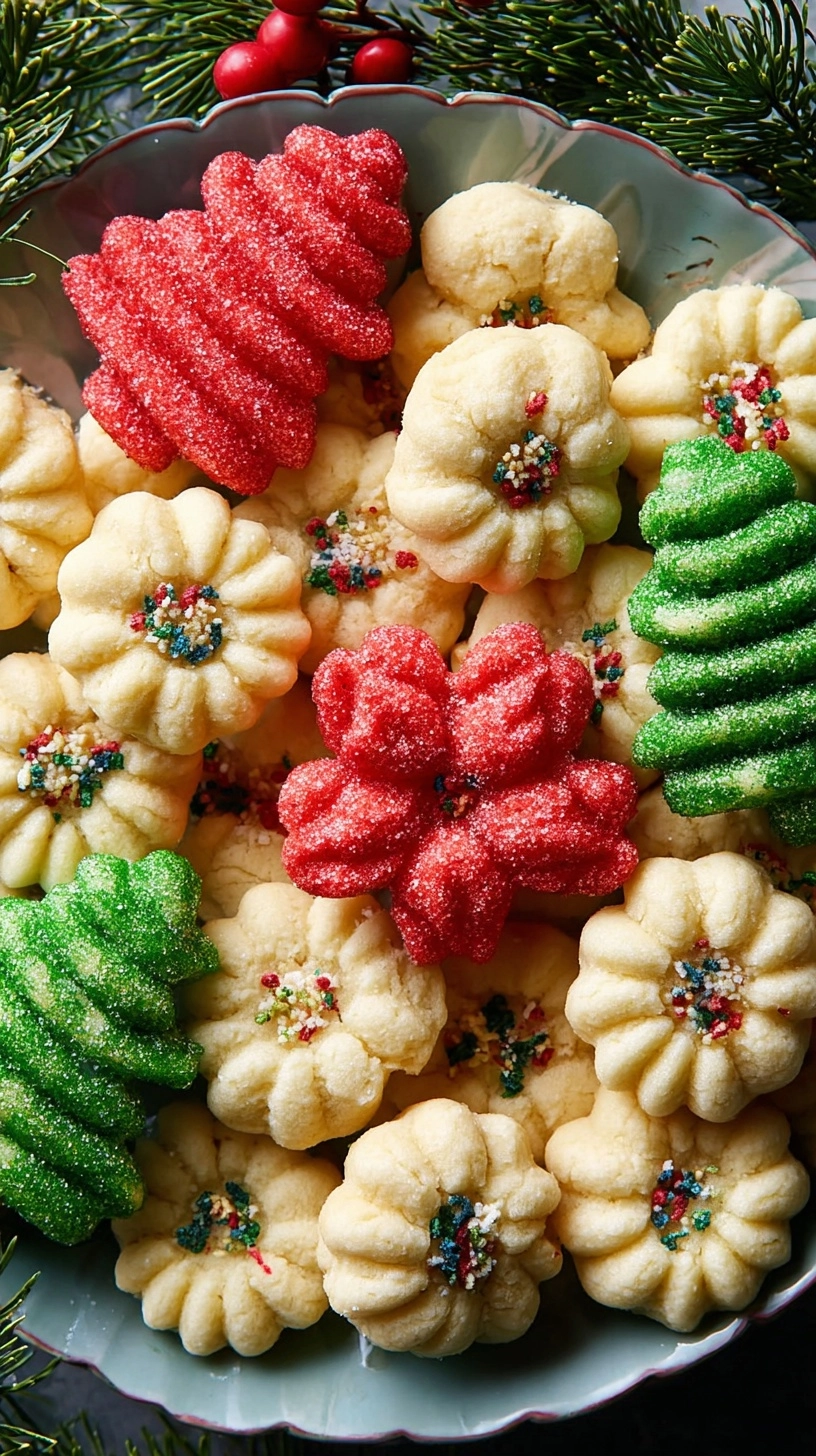
Transfer the dough into your cookie press, ensuring no air pockets remain. Choose your desired disk pattern—stars and rosettes are most forgiving for beginners, while ribbons and trees require steadier pressure. The dough should feel firm but pliable, similar to playdough consistency.
Step 5: Pipe and Bake
Preheat your oven to 375°F (190°C). Pipe cookies directly onto ungreased baking sheets, spacing them 1 inch apart. Bake for 12-15 minutes until the edges are set but not browned—overbaking creates dry, crumbly textures rather than the desired tender bite.
Nutritional Information
Each Holiday Spritz Cookie (based on 48 servings) contains approximately:
- Calories: 78
- Total Fat: 4.2g (6% DV)
- Saturated Fat: 2.6g
- Cholesterol: 18mg
- Sodium: 25mg
- Total Carbohydrates: 9.8g
- Dietary Fiber: 0.3g
- Sugars: 3.1g
- Protein: 1.2g
These cookies provide moderate energy density while remaining portion-friendly for holiday indulgence. The butter content supplies fat-soluble vitamins A and E, while the flour contributes small amounts of iron and B vitamins.
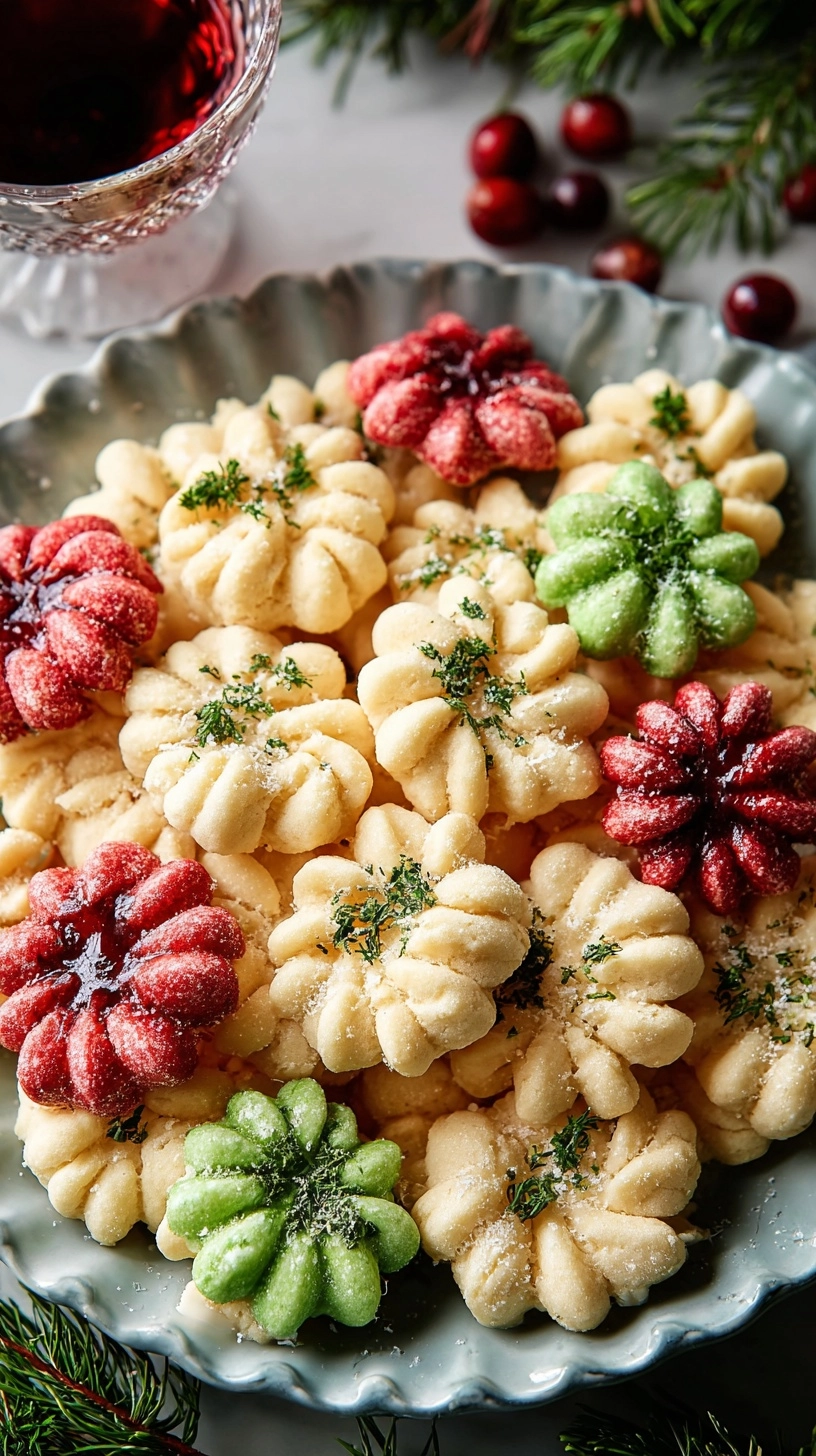
Healthier Alternatives for Traditional Spritz Cookies
Transform your Holiday Spritz Cookies into more nutritious treats without sacrificing taste or texture. Replace half the all-purpose flour with almond flour to boost protein content by 40% while adding healthy fats and reducing carbohydrates. Substitute powdered erythritol for sugar to cut calories by 60% per serving, though you may need to add an extra tablespoon of butter to maintain proper dough consistency.
For those avoiding dairy, coconut butter (not oil) creates remarkably similar results to traditional butter, while adding tropical notes that complement vanilla beautifully. Consider incorporating 2 tablespoons of ground flaxseed for omega-3 fatty acids, or swap vanilla extract for pure maple extract paired with a pinch of cinnamon for antioxidant benefits.
Creative Serving Suggestions
Present your Holiday Spritz Cookies as part of an elegant dessert board alongside dark chocolate squares and fresh berries for sophisticated entertaining. Create cookie sandwiches by piping cream cheese frosting between two cookies, then rolling edges in chopped pistachios for restaurant-quality presentation.
For children’s parties, arrange cookies on tiered stands with small bowls of colored sugar, mini chocolate chips, and sprinkles for DIY decorating stations. Package individual cookies in clear cellophane bags tied with festive ribbons for memorable party favors that guests can enjoy later.
Consider serving alongside hot beverages—these cookies pair exceptionally well with coffee, hot chocolate, or spiced tea, as their buttery texture complements warm drinks perfectly.
Common Mistakes That Ruin Spritz Cookies
The most frequent error involves using butter that’s too warm, resulting in dough that spreads excessively during baking and loses its defined shape. Butter should feel cool to the touch but still yield to pressure—if you can easily make deep fingerprints, it’s too soft.
Another critical mistake is adding too much flour when the dough feels sticky. Instead of adding extra flour, chill the dough for 15 minutes, which firms the butter without compromising texture. Overpacking the cookie press creates dense, tough cookies, while insufficient pressure results in broken or incomplete shapes.
Finally, many bakers attempt to remove cookies from baking sheets too quickly. Allow cookies to set for 3-4 minutes on the hot pan before transferring to cooling racks to prevent breaking.
Smart Storage Solutions for Maximum Freshness
Store completely cooled Holiday Spritz Cookies in airtight containers with parchment paper layers between rows to prevent sticking and maintain their delicate shapes. Properly stored cookies remain fresh for up to one week at room temperature or three months when frozen.
For make-ahead convenience, prepare the dough up to three days in advance and refrigerate in the cookie press. Allow chilled dough to sit at room temperature for 10 minutes before piping for optimal consistency.
Freeze baked cookies in single layers on baking sheets for 2 hours, then transfer to freezer bags. This prevents clumping and maintains individual shapes beautifully.
Frequently Asked Questions
Why won’t my dough come out of the cookie press smoothly?
This typically indicates the dough is too cold or too stiff. Allow it to warm slightly at room temperature, or add 1-2 teaspoons of milk to soften the consistency.
Can I make spritz cookies without a cookie press?
While traditional piping bags work, the results won’t have the same defined ridges. Use a star tip and pipe small rosettes for similar visual appeal.
How do I prevent cookies from sticking to ungreased pans?
Ensure your baking sheets are completely clean and cool before piping. The butter content in properly mixed dough should prevent sticking naturally.
What’s the secret to getting cookies to stick to the pan during piping?
Press firmly and pause for 2-3 seconds before lifting the press. If cookies lift with the press, the dough may be too stiff or the pan too warm.
