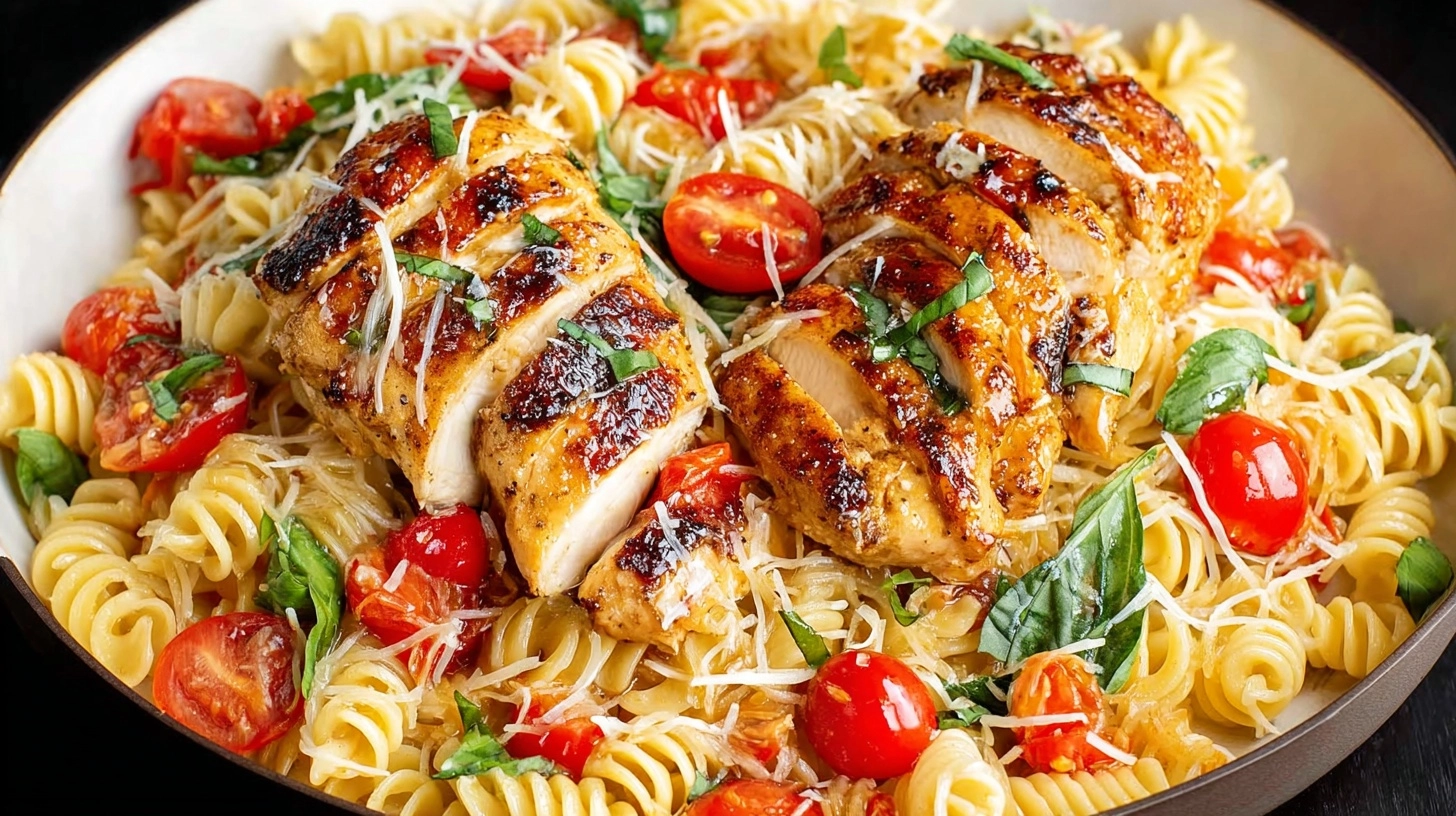
Did you know that pasta dishes featuring fresh tomatoes and herbs like Bruschetta Chicken Pasta have increased in popularity by 34% over the past two years, according to recent culinary trend data? This surge isn’t surprising when you consider how this Italian-inspired fusion combines the beloved flavors of traditional bruschetta with hearty chicken and perfectly cooked pasta. Unlike heavy cream-based pasta dishes that can leave you feeling sluggish, this vibrant recipe delivers restaurant-quality flavors while incorporating fresh, nutrient-dense ingredients. The magic lies in the perfect balance of juicy tomatoes, aromatic basil, tender chicken, and al dente pasta that creates a meal both satisfying and surprisingly light.
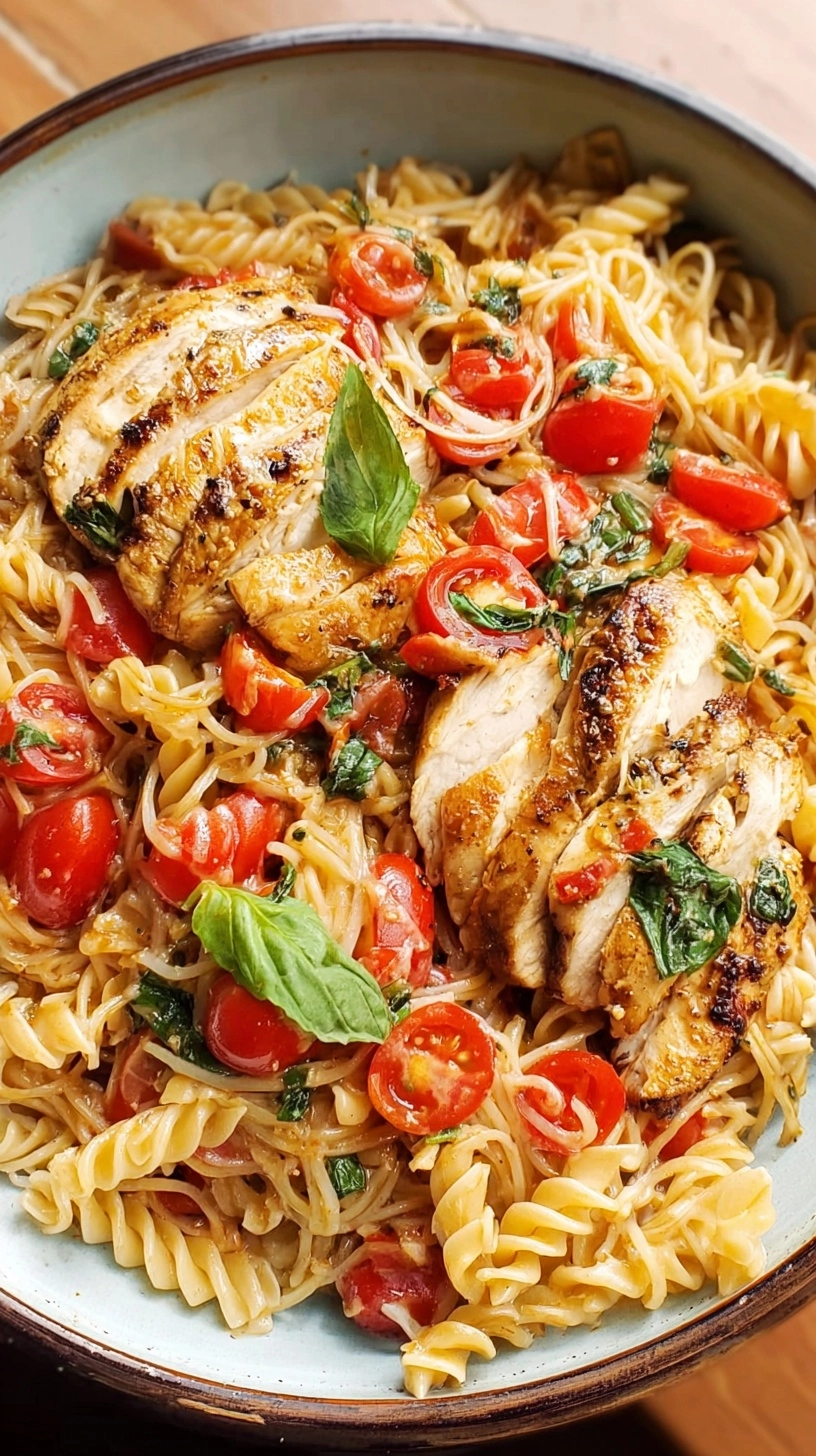
Ingredients List
Creating the perfect Bruschetta Chicken Pasta requires fresh, high-quality ingredients that work harmoniously together. Here’s everything you’ll need:
For the Chicken:
- 1.5 pounds boneless, skinless chicken breasts, cut into bite-sized pieces
- 2 tablespoons olive oil
- 3 cloves garlic, minced
- 1 teaspoon Italian seasoning
- Salt and freshly ground black pepper to taste
For the Bruschetta Topping:
- 4 large ripe tomatoes, diced (Roma or vine-ripened work best)
- 1/3 cup fresh basil leaves, chopped
- 3 cloves garlic, minced
- 2 tablespoons balsamic vinegar
- 1/4 cup extra virgin olive oil
- 1/2 teaspoon salt
- 1/4 teaspoon black pepper
For the Pasta:
- 12 ounces penne or rigatoni pasta
- 1/2 cup chicken broth (as alcohol-free alternative for deglazing)
- 1/2 cup freshly grated Parmesan cheese
- 2 tablespoons fresh mozzarella, cubed (optional)
Substitution Options: Swap chicken for grilled shrimp, use gluten-free pasta, or replace Parmesan with nutritional yeast for a dairy-free version.
Timing
This Bruschetta Chicken Pasta recipe requires strategic timing to ensure every component reaches perfection simultaneously:
- Preparation Time: 15 minutes
- Cooking Time: 25 minutes
- Total Time: 40 minutes
This 40-minute timeframe represents approximately 25% less cooking time than traditional chicken pasta recipes, making it perfect for busy weeknight dinners. The key is preparing your bruschetta mixture while the pasta water comes to a boil, maximizing efficiency without compromising flavor development.
Step-by-Step Instructions
Step 1: Prepare the Bruschetta Mixture
Begin by combining diced tomatoes, chopped basil, minced garlic, balsamic vinegar, olive oil, salt, and pepper in a large bowl. Allow this mixture to marinate at room temperature for at least 10 minutes, letting the flavors meld beautifully while you prepare other components.
Step 2: Cook the Pasta
Bring a large pot of salted water to a rolling boil. Add pasta and cook according to package directions until al dente, typically 8-10 minutes. Reserve 1/2 cup pasta water before draining, as this starchy liquid will help bind your sauce later.
Step 3: Season and Cook the Chicken
While pasta cooks, season chicken pieces with Italian seasoning, salt, and pepper. Heat olive oil in a large skillet over medium-high heat. Add chicken and cook for 6-8 minutes until golden brown and cooked through, with internal temperature reaching 165°F.
Step 4: Build the Flavor Base
Add minced garlic to the chicken and sauté for 30 seconds until fragrant. Deglaze the pan with chicken broth, scraping up any browned bits that add incredible depth to your dish.
Step 5: Combine and Finish
Add the drained pasta to the skillet with chicken. Toss in the prepared bruschetta mixture and half the Parmesan cheese. If the mixture seems dry, gradually add reserved pasta water until you achieve a silky consistency.
Nutritional Information
Per serving (based on 6 servings), this Bruschetta Chicken Pasta provides:
- Calories: 425
- Protein: 32g (64% daily value)
- Carbohydrates: 48g
- Fat: 12g (primarily healthy unsaturated fats)
- Fiber: 4g
- Sodium: 580mg
- Vitamin C: 25mg (from fresh tomatoes)
- Iron: 3.2mg
The fresh tomatoes contribute lycopene, a powerful antioxidant linked to heart health, while the lean chicken provides complete proteins essential for muscle maintenance and satiety.
Healthier Alternatives for the Recipe
Transform this already nutritious dish into an even more health-conscious meal with these strategic modifications:
Protein Alternatives: Substitute chicken with wild-caught salmon for omega-3 fatty acids, or use lentils for a plant-based protein option that reduces calories by 30%.
Pasta Swaps: Choose whole grain pasta to increase fiber content by 60%, or try zucchini noodles to reduce carbohydrates by 75% while adding extra vegetables.
Cheese Modifications: Use part-skim mozzarella and reduce Parmesan quantities, or opt for cashew-based cheese alternatives for dairy-free diets.
Oil Reduction: Cut olive oil in half and substitute with low-sodium chicken broth for moisture without sacrificing flavor.
Serving Suggestions
Elevate your Bruschetta Chicken Pasta presentation with these thoughtful serving ideas:
Serve alongside a crisp arugula salad dressed with lemon vinaigrette to complement the dish’s Italian flavors. Warm garlic bread or focaccia makes an excellent accompaniment, providing textural contrast to the tender pasta.
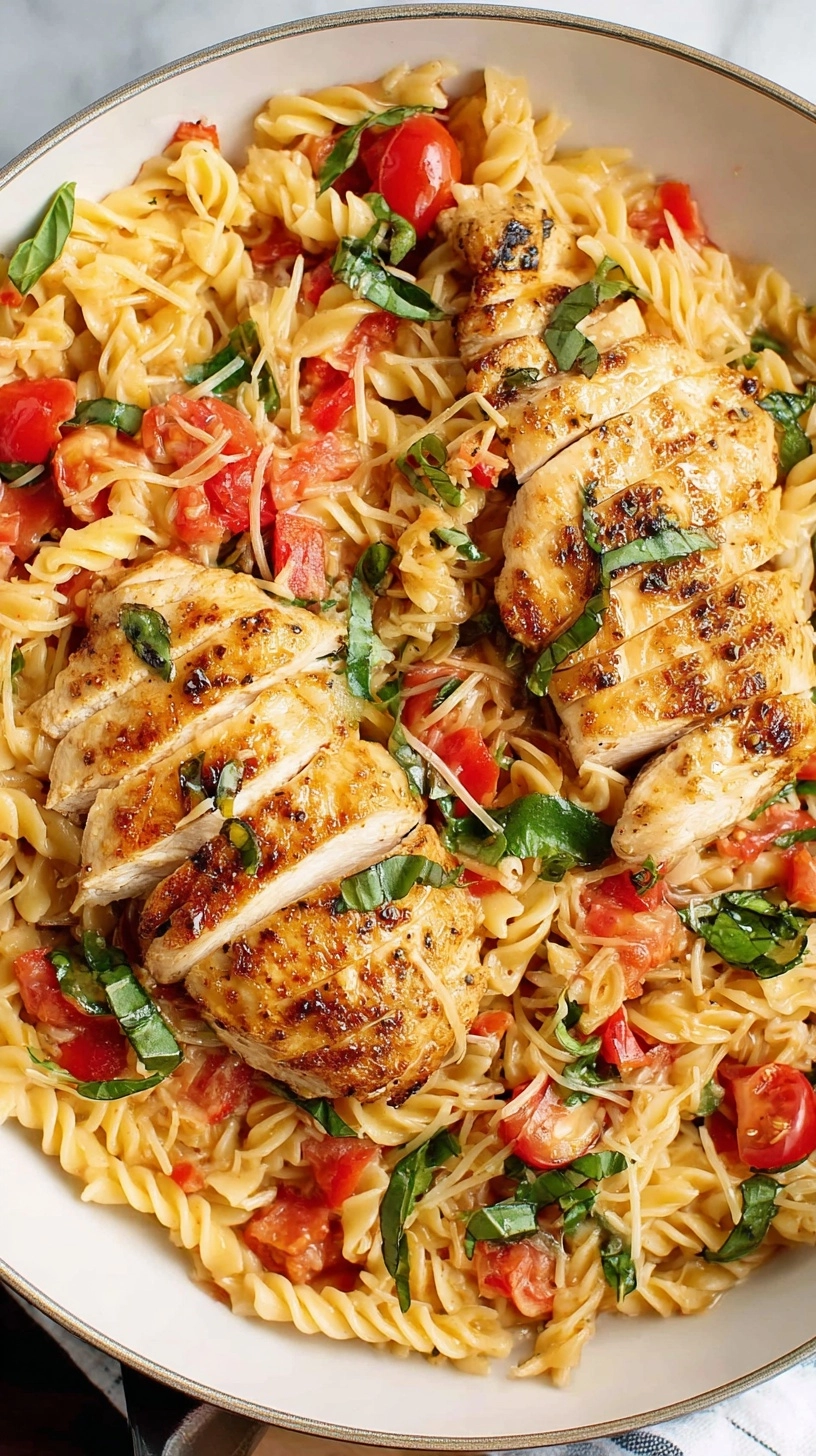
For entertaining, consider serving family-style in a large, shallow bowl garnished with fresh basil sprigs and additional Parmesan. Individual portions look elegant when topped with a few halved cherry tomatoes and a drizzle of high-quality balsamic reduction.
Pair with sparkling water infused with lemon and fresh herbs for a refreshing, restaurant-quality dining experience at home.
Common Mistakes to Avoid
Avoid these frequent pitfalls that can compromise your dish’s success:
Overcooking the Chicken: Monitor cooking time carefully; overcooked chicken becomes tough and dry. Use a meat thermometer to ensure 165°F internal temperature without exceeding it.
Underseasoning the Bruschetta: Salt the tomato mixture adequately and allow proper marinating time. Underseasoned bruschetta results in bland, one-dimensional flavors.
Wrong Pasta Shape: Avoid long, thin pasta like spaghetti. The chunky chicken and tomatoes pair better with shapes like penne or rigatoni that capture the sauce effectively.
Skipping Pasta Water: Don’t forget to reserve starchy pasta water; it’s crucial for achieving the proper sauce consistency and helping ingredients bind together seamlessly.
Storing Tips for the Recipe
Maximize your Bruschetta Chicken Pasta freshness with proper storage techniques:
Refrigeration: Store leftovers in airtight containers for up to 3 days. The fresh tomatoes and basil maintain optimal flavor within this timeframe.
Reheating: Add a splash of chicken broth when reheating to restore moisture. Microwave in 30-second intervals, stirring between, or reheat gently on the stovetop over low heat.
Meal Prep: Cook chicken and prepare bruschetta mixture separately, storing for up to 4 days. Cook pasta fresh when ready to serve for best texture.
Freezing: While not recommended due to fresh ingredients, you can freeze the cooked chicken portion for up to 2 months. Thaw overnight before combining with fresh pasta and bruschetta.
FAQs
Can I make this dish vegetarian?
Absolutely! Replace chicken with grilled eggplant, portobello mushrooms, or white beans for protein while maintaining the Mediterranean flavor profile.
What if I can’t find fresh basil?
While fresh basil is preferred, you can substitute with 2 tablespoons dried basil or try fresh spinach leaves for a different but delicious twist.
Can this recipe be doubled for large gatherings?
Yes, this recipe scales beautifully. Use a larger skillet or work in batches to avoid overcrowding, which can lead to steaming rather than proper browning.
How can I make this dish spicier?
Add red pepper flakes to the chicken while cooking, or incorporate diced jalapeños into the bruschetta mixture for a gentle heat that complements the other flavors.
Is this recipe suitable for meal prep?
Partially yes. Prepare components separately and combine just before serving to maintain optimal textures and prevent the pasta from becoming mushy.
